POST WAR ERA TO PRESENT

Issues in the Constitution, Taxation, and Agrarian Reform
The 1973 Constitution
During the post-war era, the Marcos administration introduced a new constitution to the public that along with the Prime Minister of the office and two new commissions: the Commission of Audit (CoA) and the Civil Service Commission (CSC). This Constitution also explained that the Prime Minister has more power than the president, since it is the head of the government which would result to a shift from a Republic government to a Parliamentary government. This also describes the country as an independent nation, promotes the Filipino-centric values of such Duties of Filipino youth, Civilian authority, etc.
Meanwhile, this constitution didn’t regulate the power of government officials, it also didn’t object to the idea of reelection of the president. During this time, the president was Ferdinand Marcos Sr. who was a dictator and implemented the Martial Law throughout his regime. Since there wasn’t any ban on reelection of the president, Marcos ran again for presidency who ended up being reelected that caused the Martial Law to extend. This was a hard time for the Philippines whose citizens are suffering from the strict implementation of Martial Law, and caused them to retaliate and join forces to promote democracy led by Maria Corazon “Cory” Aquino that later on became the 11th president of the Philippines.
The 1987 Constitution
This constitution also known as the “Freedom Constitution” changed the country to a Democratic Republic, promoting a just and dynamic social order that will ensure the prosperity and independence of the nation and free the people from poverty by promoting full employment, standards of living, and improved quality of life for all. The constitution also promoted principles such as the separation of the Church from the government, implementation of ROTC or basically army training, public health, education and labor, and etc. The duties of the president and the prime minister was also merged and renamed various ministries into departments. Local Governments was also subdivided into regions: Province- City- Municipality- Barangay, and also empowered the Social Justice and Human Rights by diffusing wealth and property to the people and securing human rights.
Although our current constitution is better than the early constitutions, it still doesn’t regulate the power of Government officials and object the idea of reelection of the president. This was pointed out by president Rodrigo Duterte, he stated that the corrupt officials were destroying the country from within and that the title and wealth of a Government official was being abused in terms of justice.
Taxation
The Bureau's second major reorganization occurred on January 1, 1951, with the passage of Executive Order No. 392. There are three (3) new departments: 1) Legal, 2) Assessment, and 3) Collection. In late January of the following year, Memorandum Order No. V-188 established the Withholding Tax Unit, which reports to the Assessment Department's Income Tax Division. Concurrently, Republic Act (RA) 690 mandated the implementation of the withholding tax system. This method of collecting income tax upon receipt resulted in the collection of approximately 25% of the total income tax collected during the specified period.
The Bureau's third major reorganization took effect on March 1, 1954, with Revenue Memorandum Order (RMO) No. 41. As a result, the following offices were established: 1) Specific Tax Division, 2) Litigation Section, 3) Processing Section, and 4) Office of the City Revenue Examiner. RMO No. V-4-47 established a Training Unit on September 1, 1954.
Marcos Administration
The tax system under the Marcos administration was generally regressive as it was heavily dependent on indirect taxes. Indirect taxes and international trade taxes accounted for about 35% of total tax revenue, while direct taxes only accounted for 25%.
Cory Aquino Administration
Operation: Walang Lagay" was launched to promote the efficient and honest collection of taxes. In 1987, the Bureau was reorganized under the administration of Commissioner Bienvenido Tan, Jr. The adoption of the VAT system was one of the structural reforms provided for in the 1986 Tax Reform Program which was designed to simplify tax administration and make the tax system more equitable.
Ramos Administration
This involved the establishment of a modern and computerized Integrated Tax System and Internal Administration System.
Estrada Administration
One of the most significant reform measures was the implementation of the Economic Recovery Assistance Payment (ERAP) Program, which granted immunity from audit and investigation to taxpayers who have paid 20% more than the tax paid in 1997 for income tax, VAT and/or percentage taxes.
Arroyo Administration
The aim is to make the tax system simpler, more efficient and transparent for Filipinos and to transform the workforce.
P-Noy Administration
During her first few months in the BIR, Commissioner Henares focused on the filing of tax evasion cases under the Run After Tax Evaders (RATE) Program, in compliance with the SONA pronouncements of President Aquino.
Duterte Administration
In his first few days in the Bureau, Commissioner Dulay ordered the streamlining of processes and requirements involving the BIR's frontline transactions, specifically the processing of Tax Clearance Certificates and issuance of Certificates Authorizing Registration.
Land/Agrarian Reform
During the post-war until the present era of the Philippines, the Agrarian Reform has undergone several changes implemented by the government during each president’s term to help assist the local farmers of our country. These changes are as follows:
Manuel L. Quezon (1935-1944), he took the initiative on Agrarian Reform through his program of social justice focused on the purchase of large haciendas which were divided and sold to tenants, the program did not succeed because of tight budget allocation, pushing through the land reform program was still a difficult task for the following presidents.
Manuel Roxas (1946-1948), he became the president and passed the Republic Act No. 34 that establishes the 70-30 sharing arrangement between the tenant and landlord, respectively, and reduced the interest of landowners' loans to tenants at 6% or less. However, the farmers were just forced to resell their lands to the landowning class due to the lack of support facilities and this gave the basis to doubt the real meaning of the land reform program.
Elpidio Quirino (1948-1953), he established the Land Settlement Development Corporation (LASEDECO) to accelerate and expand the resettlement program of the government, but it didn't succeed due to limited post-war resources.
Ramon Magsaysay (1953-1957), he passed the RA 1160 of 1954 and pursued the resettlement program through the National Resettlement and Rehabilitation Administration (NARRA) and accelerates the free distribution of agricultural lands to landless tenants and farmers. Magsaysay also established the Court of Agricultural Relations in 1955 in order to improve tenancy security and fix land rentals on tenanted farms, then he created the Agricultural Tenancy Commission that would administer the problems and concerns due to tenancy.
The key program of his administration to support the Agrarian Reform was the Agricultural Credit and Cooperative Financing Administration (ACCFA), government agency that would provide warehouse facilities and assist to farmers and established an organization called Farmers Cooperatives and Marketing Associations (FACOMAs). Although out of the targeted 300 haciendas for distribution, only 41 were distributed to the tenants and farmers after its 7 years of implementation.
Carlos P. Garcia (1957-1961), during his term, he didn't pass any legislation, but he continued to implement the land reform programs of former President Magsaysay.
Diosdado Macapagal (1961-1965), he was considered as the Father of Agrarian Reform and the enactment of the Agricultural Land Reform Code or RA No. 3844 happened during his term and this was considered as the most comprehensive piece of legislation ever enacted in the Philippines. However, the Congress did not provide effort to come up with a separate bill to provide funding for its implementation, but the program still benefited 7,466 farmer beneficiaries.
Ferdinand Marcos (1965-1986), his administration’s Agrarian Reform Program was the Presidential Decree (PD) No. 27 that's designed to uplift the farmers from poverty and ignorance to make them useful, dignified, responsible and progressive partners in nation building. However, it was labeled as "revolutionary" by some sectors for two reasons:
1. It was pursued under Martial Law and intended to make quick changes without going through legislative or technical processes.
2. It was the only law in the Philippines ever done in handwriting.
Corazon C. Aquino (1986-1992), her Proclamation 131 instituted the Comprehensive Agrarian Land Reform Program (CARP) as the major program of the government. During her term, there were a lot of accomplishments in the implementation of the Agrarian Reform, however, there were also some challenges faced by the administration. First, challenges on land valuation. Second, despite the allocated Agrarian Reform Fund (ARF), the administration still experienced a major budgetary shortfall. They also experienced constant changes in DAR leadership and there were allegations that the President lacks on political wills leadership and genuine commitment to implement the program.
Fidel V. Ramos (1992-1998), he brought back the support of key stakeholders of CARP by bridging certain policy gaps on land acquisition and distribution, land valuation, and case resolution, although the administration faced some failure in enforcing the installation of some farmer beneficiaries on awarded lands. Also, some sectors complained regarding the slowness of the administration in the acquisition and distribution of privately owned lands.
Joseph Ejercito Estrada (1998-2001), he launched the Magkabalikat Para sa kaunlarang Agraryo (MAGKASAKA) that has the concept of having investors bring in capital, technology and management support while the farmers will contribute, at most, the use of their land itself. However, the administration experienced fiscal constraints that resulted to the unpaid or delayed payment of landowners covered under the compulsory acquisition and VOS schemes. And there were also issues on inter and antra ARBs conflicts.
Gloria Macapagal Arroyo (2001-2010), she adopted the BAYAN-ANIHAN concept as the implementing framework for CARP which means a united people working together for the successful implementation of agrarian reform. The BAYAN-ANIHAN framework includes the strategies such as: Salin-Lupa, Katarungan, Bayanihan, Kabayanihan or the Konsehong Bayan Para sa Anihan, and Kamalayan.
Benigno Simeon Aquino III (2010-2016), he implemented a framework of CARP by bending DAR which is the lead agency for CARP implementation on sustaining the gains if agrarian reform through its three major components namely Land Tenure Improvement (LTI), Program Beneficiaries Development (PBD) and Agrarian Justice Delivery (AJD).
Reference/s:
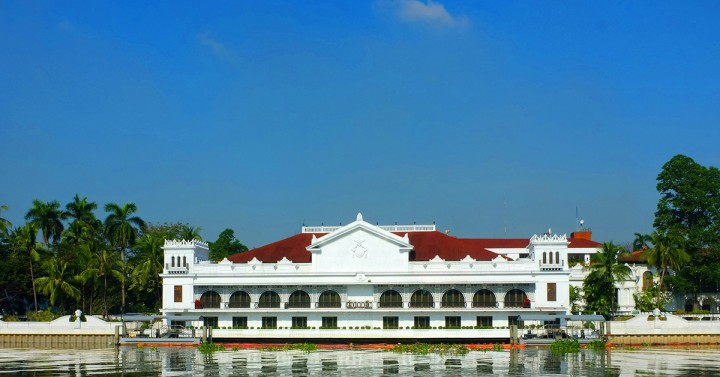
Malacaan Palace. (2019b, February 12). Philippine News Agency. https://files01.pna.gov.ph/ograph/2019/02/14/malacaan-palace.jpg
The Philippine Constitution. (2018, May 11). elms.STI.edu. https://elms.sti.edu/files/4039736/04_Handout_1(4).pdf?lmsauth=45656615d55d3170ff1e328586274abd37498389
Philippine Taxation and the History of the Bureau of Internal Revenue. (2018, May 11). elms.STI.edu. https://elms.sti.edu/files/4039736/04_Handout_2(2).pdf?lmsauth=d954fc5cc3a6382c23aece4a45adca3c6309995dAgrarian Reform FAQs (Frequently Asked Questions). (2018, May 11). elms.STI.edu. https://elms.sti.edu/files/4039736/04_Handout_3(2).pdf?lmsauth=2a8775faee345cbd2d14332dc373a0963f6d8723


Comments
Post a Comment